ZF unveils software-driven tyre noise reduction technology at CES 2026
German automotive technology company ZF has introduced a new software solution aimed at significantly reducing tyre noise inside vehicle cabins without adding extra hardware. The innovation, called Active Noise Reduction, will be showcased at the Consumer Electronics Show (CES) 2026 in Las Vegas from January 6 to 9. ETAuto.com
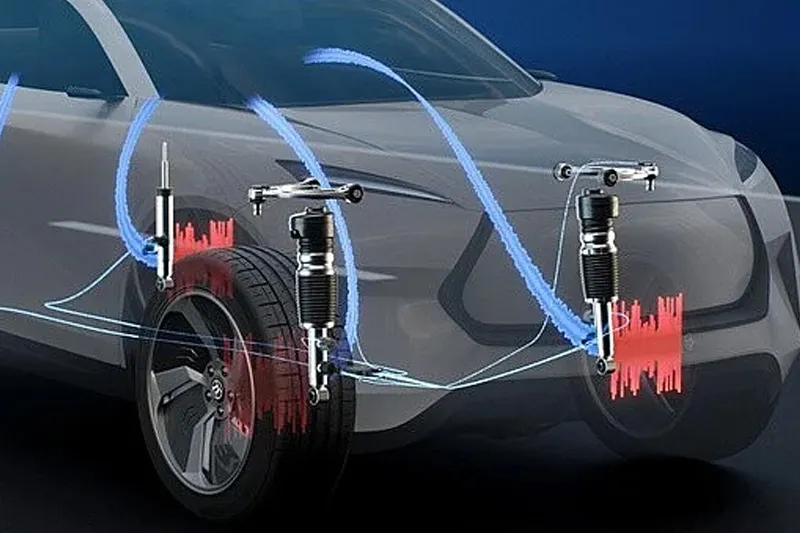
The noise reduction system targets tyre cavity noise, the sound generated as tyres interact with the road surface and vehicle structure that travels through chassis components. Instead of relying on traditional acoustic materials, microphones, or speakers, ZF’s approach uses software integrated into the chassis control system to counter noise at its source.
At the heart of the solution is ZF’s Smart Chassis Sensor with an integrated acceleration sensor that detects vibrations transmitted from tyres through components like control arms and dampers. A proprietary algorithm analyses these signals to identify characteristic noise patterns around 200 Hz. The software then produces counter-signals through ZF’s cubiX software platform, directing them via semi-active CDC dampers. Controlled micro-adjustments in the dampers help suppress unwanted noise while maintaining ride comfort and damping performance.
ZF says the current version of the software can achieve tyre noise reductions in excess of 3 dB, which passengers would clearly perceive as quieter cabin acoustics. The company also suggests that future iterations could push reductions up to 10 dB.
Unlike conventional systems that require additional acoustic insulation or hardware, ZF’s software-led solution operates through existing vehicle suspension components, potentially cutting cost, complexity, and weight. The technology is designed to be adaptable across multiple vehicle segments, bringing higher acoustic comfort even to lower-priced models where noise reduction solutions have been limited until now.
Editor’s View
ZF’s software-based tyre noise reduction marks a significant shift in how automotive engineers are approaching cabin comfort. For decades, reducing tyre-related noise has relied on physical insulation, specialised materials, and increasingly complex hardware. ZF’s system flips that paradigm by using intelligent algorithms and existing chassis components to deliver quieter rides.
For the tyre industry, this development highlights how tyre performance is increasingly being seen as part of an integrated vehicle system rather than just a standalone product. As vehicles become more software-defined, noise, vibration, and harshness (NVH), long a key consideration in tyre design, will intersect with electronics and control systems. This could accelerate innovation in tyres that work in harmony with vehicle software to improve comfort, efficiency, and overall driving experience.