Luxury Car Sales Fall as China Market Weakens and Cost Pressures Rise
Luxury car sales decline sharply in China as a slowing economy and shifting consumer preferences dampen demand for high-end foreign vehicles, with European brands feeling the impact. Yahoo Finance
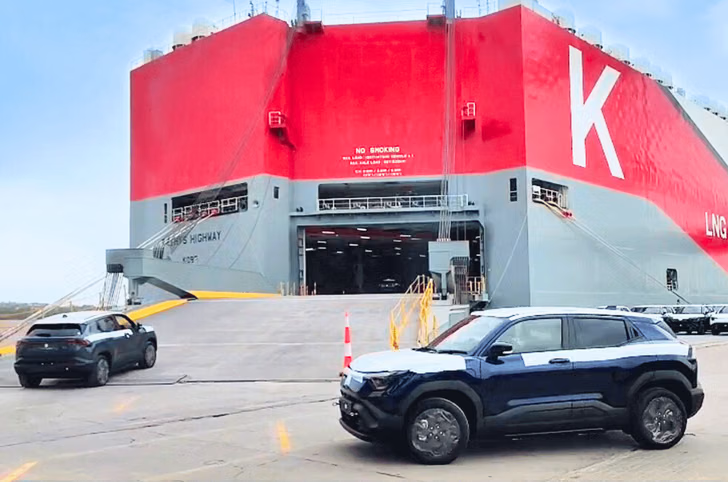
In China, demand for foreign luxury cars such as Porsche, Mercedes-Benz, BMW, and Aston Martin is falling as buyers increasingly choose more affordable Chinese models. A prolonged property downturn has reduced consumers’ appetite for big purchases, and many wealthy buyers are less eager to display status through conspicuous spending.
Government incentives for electric and plug-in hybrid vehicles, including a 20,000 yuan trade-in subsidy, have further shifted demand toward domestic brands and entry-level vehicles where discounts deliver more value. This dynamic has cut into sales of premium cars priced above 300,000 yuan ($42,400), whose share of total sales has declined in 2024 and 2025 after rising in prior years.
Chinese automakers, led by new energy vehicle maker BYD, have seized market share by offering technologically advanced EVs and hybrids at competitive prices, contributing to domestic brands capturing nearly 70 % of the passenger car market.
Used luxury car prices are also falling, with dealers offering steep discounts to clear inventory as demand softens. Some European manufacturers have reported double-digit sales drops in China’s premium segment, intensifying pressure on their global performance.
Meanwhile, automakers outside China are navigating cost challenges that are reshaping pricing strategies. Mercedes-Benz India announced up to a 2 % price increase starting January 2026, driven by higher raw material and logistics costs, partly due to a sustained weak rupee.
The luxury segment’s turbulence comes as global auto companies recalibrate strategies. Some, like Stellantis, are aggressively seeking to recover market share amid broader sales declines, though this includes shifting focus away from profit margins in certain regions.
Editor’s View
The luxury car sales decline story unfolding in China is more than a regional blip; it reflects a deeper realignment in global auto demand that also ripples through premium tyre markets. China is not just the world’s largest car market. It’s a bellwether for vehicle purchasing power and consumer confidence. When affluent buyers retreat from conspicuous consumption, long-haul tyre demand tied to high-end vehicles also shrinks. Tyre makers that supply premium OE and replacement tyres, especially for performance and luxury segments, could see order books soften as European carmakers adjust production and inventories in response to weaker demand.
At the same time, China’s rapid rise of domestic EV and hybrid brands, with tyres tailored for new energy vehicles and often aggressive pricing, introduces competitive pressure that goes beyond cars. Suppliers must think ahead: tyres for EVs, hybrids, and cost-sensitive segments require different compounds, load ratings, and performance characteristics than traditional luxury tyres. As Chinese brands gain share with locally optimised products, tyre companies aligned with European and American OEMs could lose leverage unless they diversify their portfolio. In the current climate, resilience in tyre strategy means anticipating where demand will grow, not just where it has been strong.